A Strategic 2026 Guide for Global Importers
In 2026, global furniture supply chains are no longer driven solely by price competition. Importers now face increasing pressure from fluctuating raw material costs, stricter environmental regulations, rising e-commerce return rates, and ongoing logistics uncertainty.
For furniture importers, retailers, and cross-border e-commerce brands on platforms such as Amazon and Wayfair, selecting a reliable China furniture manufacturer has become a strategic supply chain decision rather than a simple sourcing task.
A strong manufacturing partner does more than produce furniture. It supports you in managing: Custom Furniture
· Quality control risks
· Regulatory compliance
· Logistics safety
· Long-term supply stability
The question is no longer "Who offers the lowest price?"
The real question is: "Who can deliver predictable, scalable, and stable performance over time?"
Below is a structured framework to help importers evaluate Chinese furniture suppliers in 2026.
1. Real Production Capability Determines Supply Stability
When searching for a "China furniture factory," one of the most common mistakes is assuming that every supplier claiming to be a manufacturer actually owns and operates a full production system.
True manufacturing capability goes beyond having a building. It requires a fully integrated and controllable production structure.
A reliable supplier should manage key processes in-house — from material processing and structural assembly to surface finishing and final packaging. When critical stages such as painting or packaging are outsourced, quality consistency becomes significantly harder to control.
Automation level also plays a critical role. The presence of CNC machinery directly impacts dimensional accuracy and batch consistency. In the e-commerce environment, even a 1mm deviation can result in assembly complaints, returns, and negative reviews.
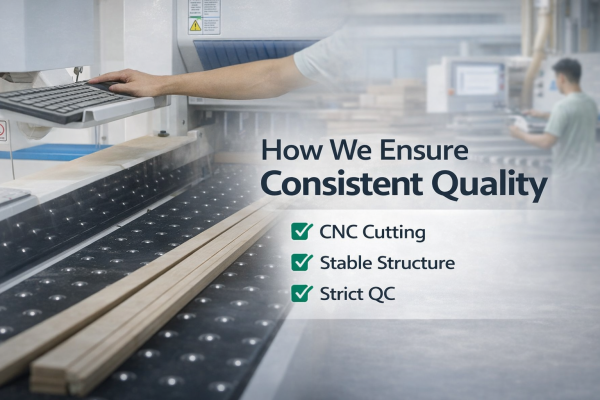
Material storage management is another often overlooked factor. Wood moisture control and stable storage conditions directly influence product performance during ocean shipping and end-user use. Without proper humidity control, warping or cracking can occur — issues that typically surface only after the product reaches the consumer.
For example, AHOME operates an integrated 30,000㎡ production facility with unified management across material intake, machining, painting, assembly, and packaging. Through live remote factory tours, overseas clients can observe the full production flow in real time. This level of transparency significantly reduces supply chain uncertainty.
For importers, production transparency itself is a form of risk management.

2. Compliance Capability Is the Gateway to Western Markets
Furniture exporting is no longer purely about manufacturing — it is equally about regulatory competence.
Environmental compliance standards such as E1, CARB P2, and TSCA Title VI have become baseline entry requirements for the US and European markets. However, compliance is not only about holding certifications; it is about ensuring consistent batch conformity.
Export documentation accuracy is equally critical. Correct HS Code classification, alignment between invoice and packing list details, and properly issued Bills of Lading all directly affect customs clearance speed. Documentation errors can lead to port delays, unexpected duties, or storage penalties — often exceeding product profit margins.
An experienced export team minimizes these risks through structured documentation workflows and cross-time-zone communication efficiency.
With over 15 years of export experience, AHOME has developed standardized documentation review systems to ensure consistency between product specifications and shipping paperwork. This systematic approach reduces compliance-related disruptions for overseas buyers.
For importers, a supplier’s compliance competence directly impacts market entry reliability.
3. An Internal QC System Is the Foundation of Long-Term Cooperation
Many suppliers emphasize "final inspection before shipment." However, mature manufacturing systems embed quality control throughout the entire production process.
A structured QC system generally consists of three stages:
Incoming Quality Control (IQC), where raw materials such as wood moisture levels, hardware strength, and panel compliance are verified before production begins.
In-Process Quality Control (IPQC), where structural stability, dimensional tolerance, and surface finishing consistency are monitored during production to prevent batch-level defects.
Final Quality Control (FQC), where full assembly simulations are conducted and packaging strength is validated prior to shipment.
For e-commerce sellers in particular, assembly simulation is essential. Poor assembly experience frequently translates into returns and low ratings.
In practice, experienced manufacturers provide detailed inspection reports prior to container loading, including actual dimension measurements, color comparison photos, assembly verification images, and packaging condition documentation.
AHOME follows this structured inspection approach, enabling overseas clients to remotely review quality verification before goods are shipped.
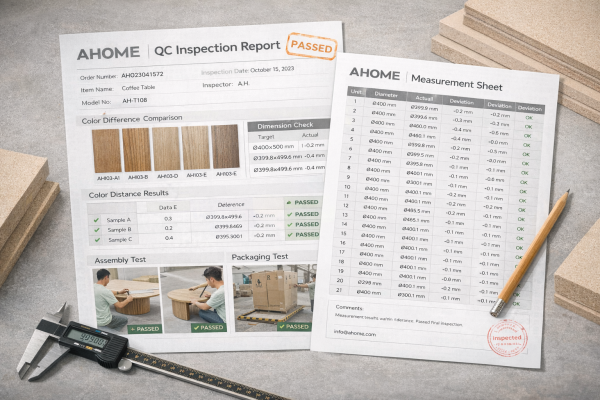
The core value of an internal QC system lies in detecting issues during production — not after products reach the market.
4. R&D and Sampling Capability Drive Product Competitiveness
For private label furniture brands, sampling is not merely a procedural step — it is a strategic opportunity for product optimization.
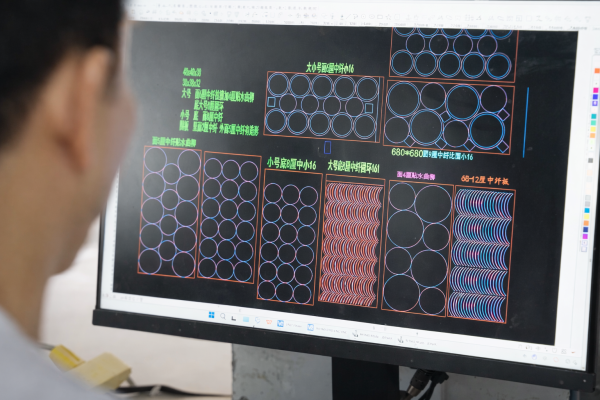
A capable manufacturer should not only execute drawings but also apply DFM (Design for Manufacturing) principles. This may involve structural adjustments to reduce shipping volume, material thickness optimization to control costs, or hardware refinements to improve durability.
A typical prototype lead time ranges from 7 to 15 days, reflecting operational efficiency. However, more important than speed is the supplier’s willingness to engage in cost and structural optimization.
In practice, AHOME’s development team collaborates with clients during the sampling stage to refine structural and packaging solutions. This proactive optimization often reduces long-term transportation costs and after-sales risks.
R&D capability ultimately determines whether a product can maintain competitiveness in evolving retail markets.
5. Standardized Export Packaging Protects Profit Margins
In 2026, shipping damage has become one of the most significant threats to profitability in furniture e-commerce.
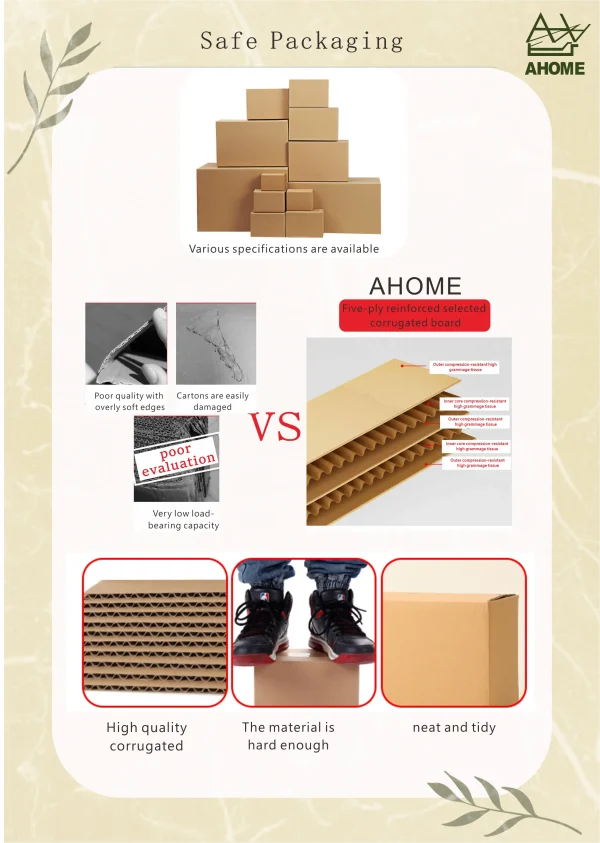
A mature export packaging system typically includes ISTA-tested packaging structures, reinforced 5-layer corrugated cartons, high-density corner protectors, EPE foam buffering, and reinforcement at structural stress points.
Container loading expertise is equally important. Efficient container space optimization (CBM optimization), anti-compression layout design, and standardized securing methods significantly reduce transit damage.
Through years of export operations, AHOME has implemented standardized container loading SOPs to enhance shipping stability and minimize transportation-related claims.
Transportation safety is not an optional enhancement — it is a critical component of cost control.
Why Price Alone Is No Longer a Reliable Decision Factor
Low pricing often signals trade-offs such as outsourced production, reduced QC oversight, downgraded packaging, or unstable material sourcing.
These hidden compromises frequently manifest later as increased return rates, higher customer service costs, and brand reputation damage.
Experienced importers calculate total risk-adjusted cost — not simply FOB price.
Supply chain stability is, in many ways, a long-term brand asset.
Conclusion: Choose a Manufacturing System, Not Just a Quote
In 2026, competition in global furniture supply chains is fundamentally about systems — stability, transparency, predictability, and scalability.
When evaluating a China furniture supplier, the key question is not who offers the lowest price, but who provides a complete manufacturing framework, regulatory support structure, and integrated quality management system.
With over 15 years of export experience, AHOME positions itself not merely as a furniture supplier, but as a system-driven manufacturing partner supporting global importers in building stable and sustainable supply chains.
For businesses seeking long-term reliability rather than short-term cost advantages, selecting a mature manufacturing system may be the most strategic decision of all.